
Meal planning has been a long time habit for me which I know has saved me time and money! I’ve been sharing our weekly meal plans over on my Instagram. Lots of followers have said they find them helpful so I thought I would share my easy to use method here.
This post is part of my reflections on the 2022 Lifegiving Home Challenge. In the challenge, we are working through Sally Clarkson’s book, The Lifegiving Home: Creating a place of belonging and becoming. January is the first month and the theme is routines, rhythms and rituals. Taking time each week to plan our meals gives me a sense of rhythm to the week and I also find it reduces stress because the decision of what we will eat each day has already been made. I hope this post helps you to start meal planning if you don’t already or perhaps provide some ideas if it is something you do in your own home.

Why meal plan?
I find that meal planning serves several purposes:
- Gives you time to look at the week ahead and identify any pinch points (e.g when you may be out over an evening meal or due in late from the day’s activities). It also helps to check how many people you are expecting for dinner each day.
- Provides a moment to check what supplies are already in your kitchen and pantry before you go to the supermarket.
- Encourages you to plan meals to suit a healthy lifestyle or to adjust to dietary needs and gives you time to research new recipes.
- Reduces food waste and prevents over-buying which in turn reduces your food bill.
My meal planning guidelines
- Pick one evening a week which you can (usually!) always commit to meal planning. If possible, book an online supermarket delivery and complete your order at the same time.
- Identify which evenings you have the most time to cook and/or prep food.
- Identify which evenings you have the least time and therefore would be helpful ‘leftovers’ evenings.
- Set your family dietary goals. We are aiming to reduce the amount of meat we buy and try to buy it from our local farmer instead of the supermarket. This means we want at least two evening meals meat free each week.
- Aim for a minimum of one meal a week which uses up ingredients that are already in your freezer, pantry or fridge and are therefore ‘no spend’ meals.
If you are new to meal planning, start with planning just your evening meals for the first week. Using my method above means you need to identify no more than five recipes you would like to cook.
Sample meal plan
Saturday – Home made meatloaf with mashed potatoes, green beans and Brussel sprouts (cook double to provide a meal for Monday night as well)
Sunday – Tofu tacos
Monday – leftovers (meatloaf)
Tuesday – Creamy garlic chicken with rice and spinach (cook double to provide a meal for Wednesday night as well)
Wednesday – leftovers (creamy garlic chicken)
Thursday – Chermoula salmon with couscous and salad
Friday – Fishcakes with rice and stir fry veg
If you don’t like eating the same meal two days in a row then why not freeze one half of your double portion. You can then eat a meal from your freezer on ‘leftover’ days so that you still don’t have to cook from scratch.

Family-friendly food
Our family prioritises eating together so we have one evening meal which our son (two years old) also eats. I ensure that our meals are low salt and have no sugar in them so that they are appropriate nutritionally for a toddler. If you have dietary requirements to consider then meal planning can help you to identify one meal which will suit the whole family rather than having to cook separate dishes.
We make sure we have breakfast and lunch supplies but don’t plan those meals in the same way that we do for dinners. For breakfast, we have eggs, cereal, bread for toast, fruit and yogurt. Our lunches vary, we make sure we have sliced meat, cheese, soup, pasta, falafel, and salads available depending on the season. I find we eat soup in the winter and salad in the summer!
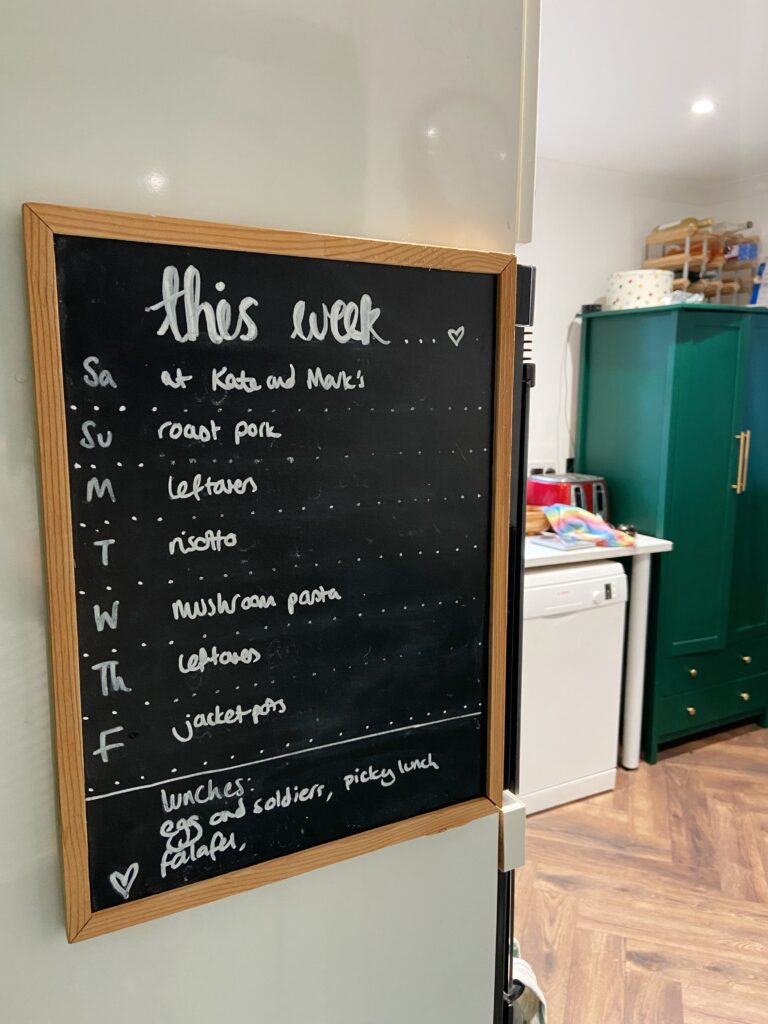
I keep a blackboard in the kitchen where I write the week’s meals so that everyone knows what is on the menu. And it helps me track if we are hosting or delivering meals to friends and family.
Discovering new recipes
As well as revisiting your cookery books, you can use online tools to find recipe ideas that match your dietary goals or needs. My favourite is BBC Good Food as I find the recipes are reliable and nutritious. I also try to share our weekly evening meal plan each week with my Instagram followers. Check out the meal plan highlights at the top of my profile for ideas.
I hope these tips are helpful. Please share your thoughts and let me know if you have any meal planning tips of your own!
Do you regularly plan what you are going to cook each week? If so, I would love to hear how this has worked for you in the comments below. And remember to follow me on Instagram @ournurturedlife.
You can join the 2022 Lifegiving Home Challenge Facebook group if you’d like to learn more about creating a home that nurtures and sustains.
There is a small group of wonderful, faithful bloggers living around the world who have collaborated to bring this challenge together. You can read their posts for January here:
Sarah at My Home Your Home Our Home shares on how to make a home as an expat overseas
Rachel at Bourne4Homeschool considers her own motivations for joining The 2022 Lifegiving Home Challenge
Ashley at Flower in the Weeds ponders her own family routines and even shares a handy downloadable PDF planner – Challenge Month One: January, a framework for the home
If you enjoyed this, then take a look at how to plan your vegetable garden in January. Another post from my Lifegiving Home series.
I just sat down and meal planned yesterday, it feels so nice to have things thought out and ready for the coming days! I love your blackboard! I used to write down our meals on the board too, I haven’t done it in quite a while, but I think that would be super helpful for all of us right now!
Thanks for reading! Well done on your meal plan for the week, like you say it is nice to not have to think about it for a few days. Hope you enjoy 🙂