
If you’re looking for an environmentally friendly and cost-effective way to choose nappies for your baby, look no further than reusable cloth nappies! Cloth nappies have come a long way in recent years and are now easier to use and care for than ever before. In this blog post, we will teach you everything you need to know about using cloth nappies, from how getting started to washing them effectively.
This three part guide explains How to Get Started with Reusable Cloth Nappies
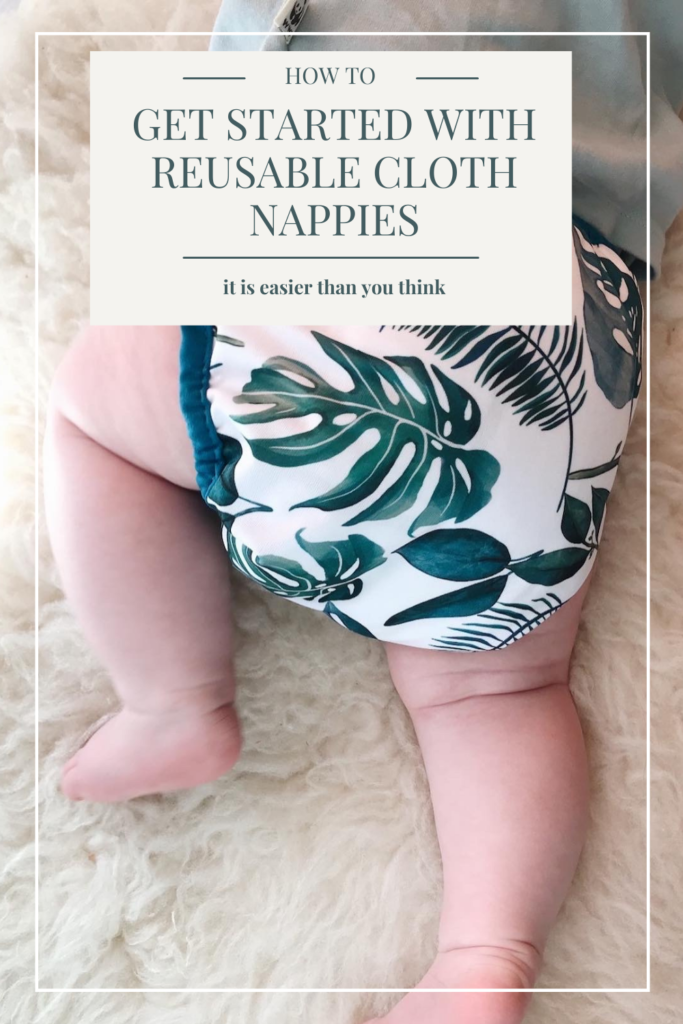
Choosing a reusable cloth nappy
The first step in using cloth nappies is choosing the right type for your baby. There are a few different types of cloth nappies available, but the most common are all-in-ones (AIOs), all-in-twos (Ai2), pocket nappies and prefolds with covers.
AIOs are the simplest type of cloth nappy to use. They are, as you may expect, all-in-one and just need to be put on your baby much like a disposable nappy.
Ai2s have absorbent liners which clip or popper in to a waterpoof outer shell.
Pocket nappies have an absorbent inner layer that is held in place within a pocket in a waterproof outer shell.
Prefolds are a piece of fabric that you fold and use with a separate waterproof cover over the top.
If the terms are starting to feel a lot like nappy jargon then take a look at my easy ‘Cloth Nappy Dictionary’ to help explain all the terms typically used.
Personally we have a selection of different types of nappies and have found that our favourites have changed as my baby has grown so don’t feel you have to pick one style and stick with it!
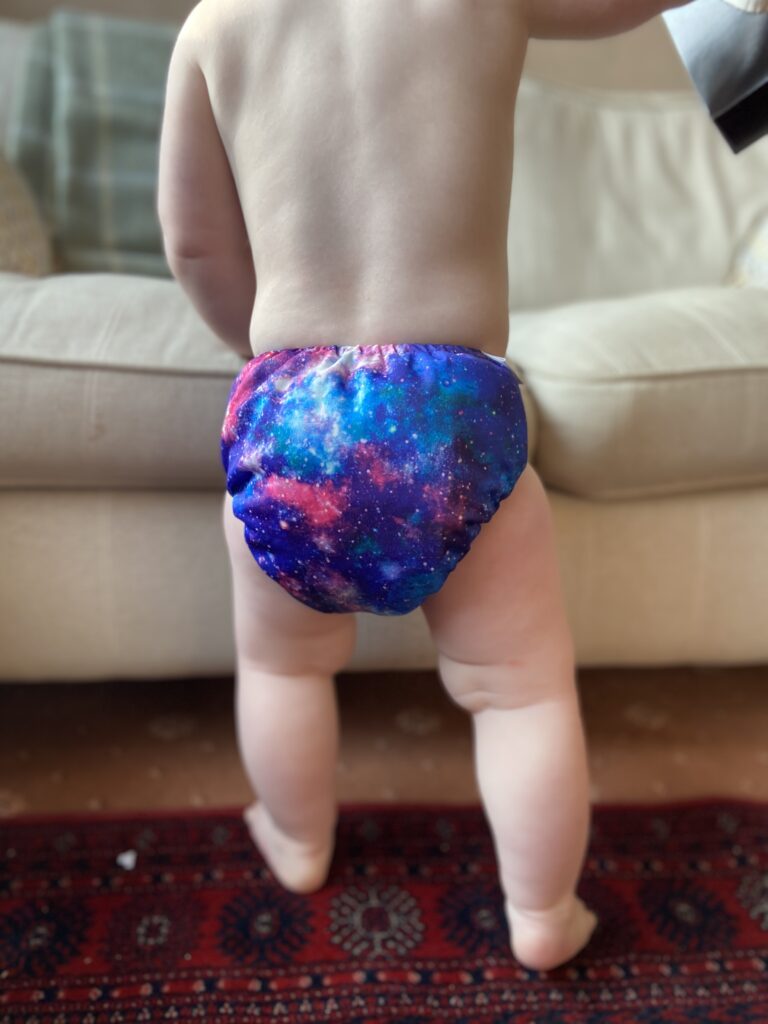
Pros and Cons of Reusable Cloth Nappies
Absorbancy – all in ones have built in absorbancy and are sometimes fiddly to boost. The benefit of them are they are easy to use and require very little prep. Pocket nappies are easy to boost, just slide extra absorbant layers into the pocket. Prefolds can be bulky but are usually very thirsty!
Slim fit or bulky – prefolds and wraps tend to be more bulky than all in ones. Pocket nappies are somewhere in between. All in ones often offer the slimmest fit.
Drying time – nappies which you can take apart tend to dry quickly. Pocket nappies and all in twos dry quicker than all in ones. The fastest drying are usually prefolds as you can unfold the absorbent piece to dry it flat. All in ones are slower drying as the absorbent layers are attached to the waterproof layer.
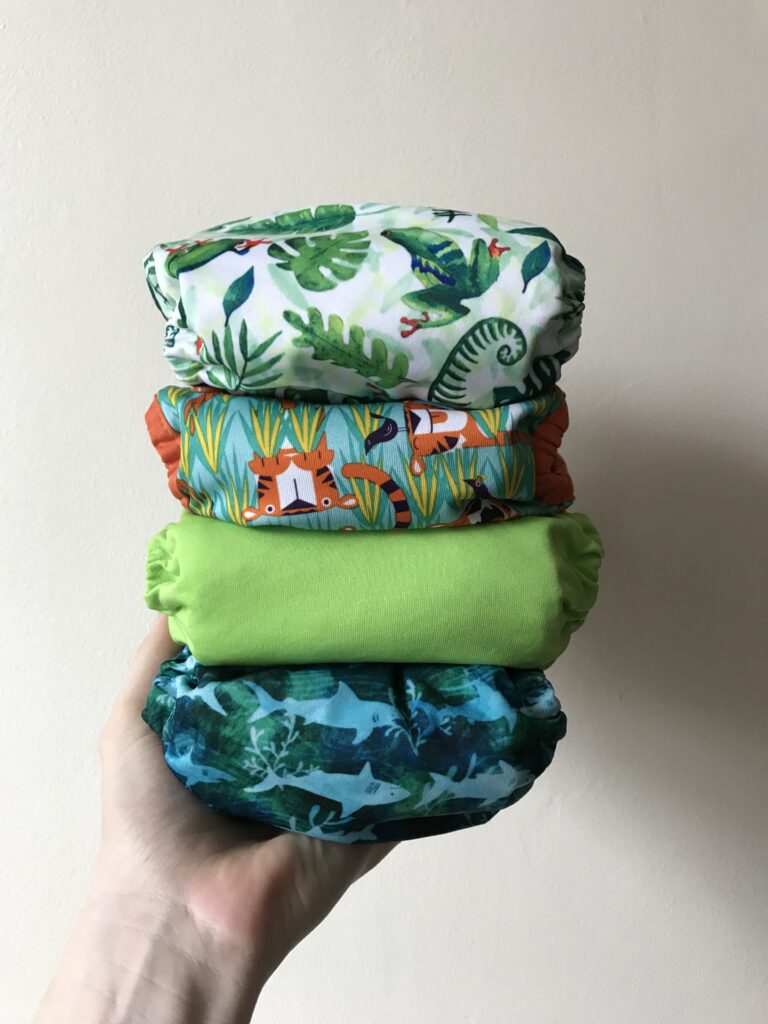
Fastenings – reusable nappies fasten either with velcro or poppers. Poppers are generally more reliable than velcro as velcro can wear more quickly. However velcro is easier to fit, especially for nursery staff or family members that occasionally have to look after your baby. Poppers seem to be a bit more toddler-proof, my two year old has worked out how to open velcro!
Price – modern cloth nappies have varying price points. Typically you pay more for higher quality materials such as bamboo, hemp and organic cotton. All in ones tend to be more expensive than pocket nappies. Some pocket nappies come with very good quality absorbant ‘boosters’. Cheaper nappies may be mostly microfibre which is a less absorbent material. Some people find they are absolutely fine, I always boost a nappy if I know it contains microfibre. ‘Boosting’ a nappy means putting more absorbant pads inside, you can buy these individually. Boosters can contain a variety of materials. Organic cotton and hemp are usually the highest quality.

Look out for part 2!
I hope this has been an interesting start to your cloth nappy journey. You will find part two explores how to fit and use cloth nappies, with part three covering how to wash and dry them.
If you are looking for a reliable, friendly and very helpful supplier, look no further than Jess at Two Little Pickles.
Do let me know if you have any questions or perhaps what your favourite type of cloth nappy is, drop me a comment below.
Leave a Reply